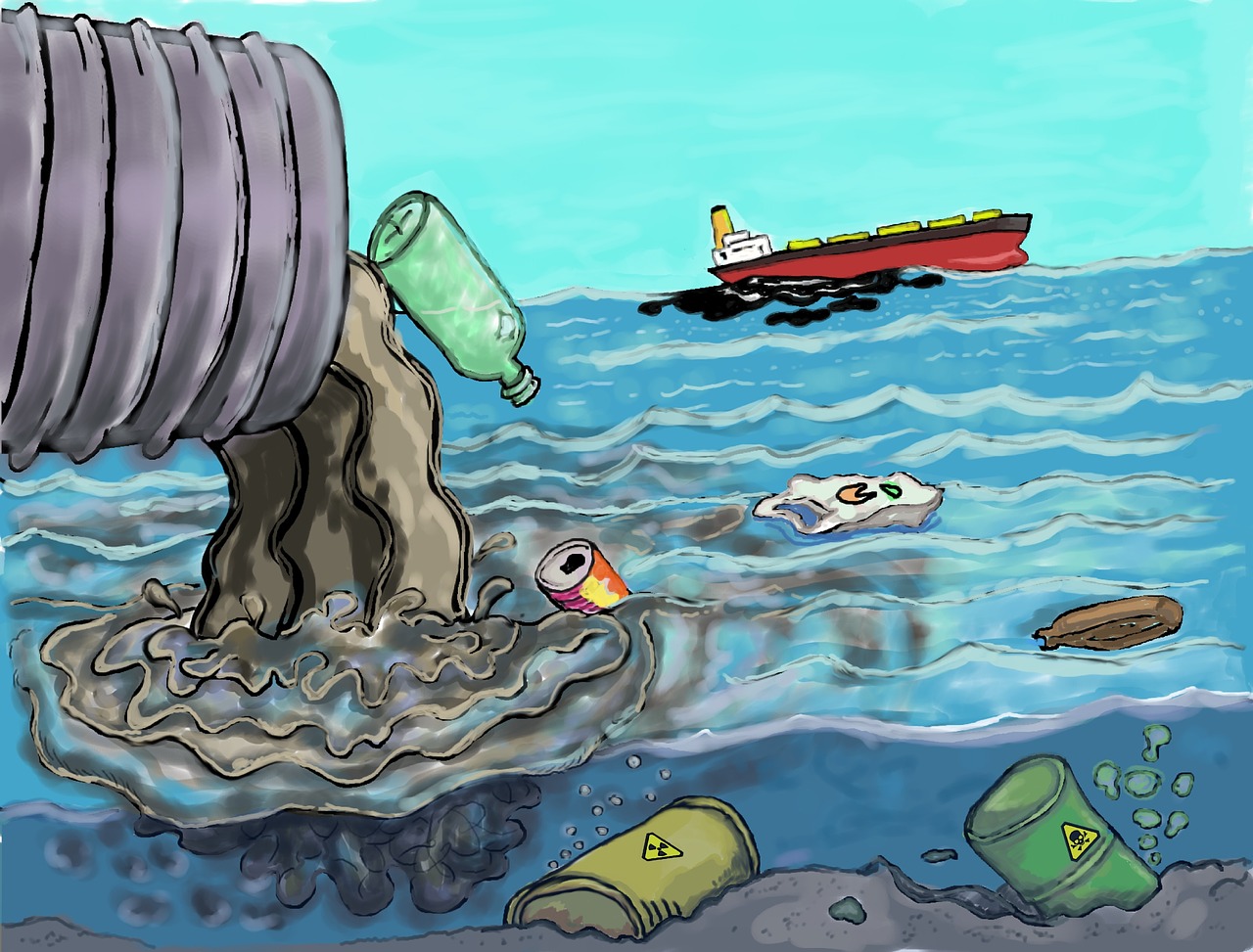
Did you know, Mariners? That every year, approximately 8 million tons of plastic enter our oceans, equivalent to emptying a full garbage truck every minute. How does marine biotechnology utilize degrading bacteria to tackle ocean pollution? Let’s discuss this in this SIC episode!
In the midst of the ocean pollution crisis, nature has provided a smart solution with the presence of marine microbial forces that tirelessly work as a “natural cleaning team.” Emergency situations in the ocean, such as 1 truckload of plastic waste entering the sea every minute, 1.3 tons of oil spills per year, and 267 endangered species, can be addressed by marine microbes as they can degrade oil, break down plastic waste 50 times faster, and save $1.2 billion annually. In fact, 1 gram of ocean sediment contains about 1 billion microbial cells. Marine microbes can degrade approximately 50-90% of oil spills, with a global economic potential reaching $6.9 billion.
Introducing the Marine Microbial Heroes
Deep in the ocean, trillions of microorganisms form a natural detoxification network. Some of the superhero microbes identified by scientists include:
- Alcanivorax borkumensis
A specialized hydrocarbon-degrading bacterium capable of breaking down 60-80% of crude oil. Works optimally in warm water at temperatures of 20° - 30°C and is a frontline defender in oil spill clean-up.
- Ideonella sakaiensis
Discovered in Japan in 2016, Ideonella sakaiensis produces the enzyme PETase, which can degrade PET plastic within weeks. This bacterium has the potential to address microplastic waste.
- Pseudomonas spp.
A versatile group of bacteria capable of degrading hazardous aromatic compounds such as benzene and toluene. Pseudomonas spp. Are commonly found in the coral reefs of Indonesia.
Bioaugmentation: The “Support Troops” of Microbes
Bioaugmentation is a bioremediation method that involves adding specific microorganisms to contaminated environments to enhance the ability of microbes to degrade pollutants. In short, bioaugmentation aims to ‘strengthen’ the natural microbial community at a location by adding specific microbes capable of breaking down existing pollutants. In the case of the Deepwater Horizon spill (2010), after a spill of 4.9 million barrels of oil, a scientist spread a strain of Alcanivorax borkumensis enriched with phosphorus nutrients. This resulted in 50% of the oil being degraded within 2 months, saving $1.2 billion in clean-up costs and accelerating ecosystem recovery three times faster.
Biostimulation: “Nutritional Supplements” for Microbes
Providing nutrients such as nitrogen and phosphate serves to accelerate the natural growth of microbial populations. Nutrient supplementation has been tested in Jakarta Bay using Oleofil (a palm oil-based nutrient) and slow-release fertilizers specifically designed for marine environments. However, processes and methods for eliminating ocean pollution require additional innovations. Future innovations may include DNA-based nanorobots that guide microbes to pollution sources, CRISPR microbes with multi-pollutant degradation capabilities, and artificial biofilms as habitats for microbes in open waters.
Despite the vast potential of marine biotechnology, challenges remain. Extreme environmental conditions, such as high salinity and great pressure at ocean depths, can affect microbial effectiveness. Therefore, further research is needed to develop techniques that can enhance the speed and efficiency of pollutant degradation.
Interesting information, isn’t it? From now on, let’s protect our oceans and not just rely on marine microbes! See you in the next SIC episode, Mariners!
References
Colwell, R. R. (2002). Biotechnology in the Marine Environment. Nature Biotechnology, 20(1): 1-2.
Kumar, M., & Singh, S. (2019). Marine Microbial Biotechnology: A Review. Journal of Marine Science and Engineering, 7(10): 348.
Kumar, V., & Singh, R. (2020). Microbial Bioremediation of Oil Pollution: A Review. Environmental Science and Pollution Research, 27(1): 1-15.
LIPI. (2023). Journal of Post-Harvest and Marine Biotechnology.
Zhang, Y., & Wang, Y. (2021). Biodegradation of Plastics by Marine Microorganisms: A Review. Marine Pollution Bulletin, 162: 111-123.